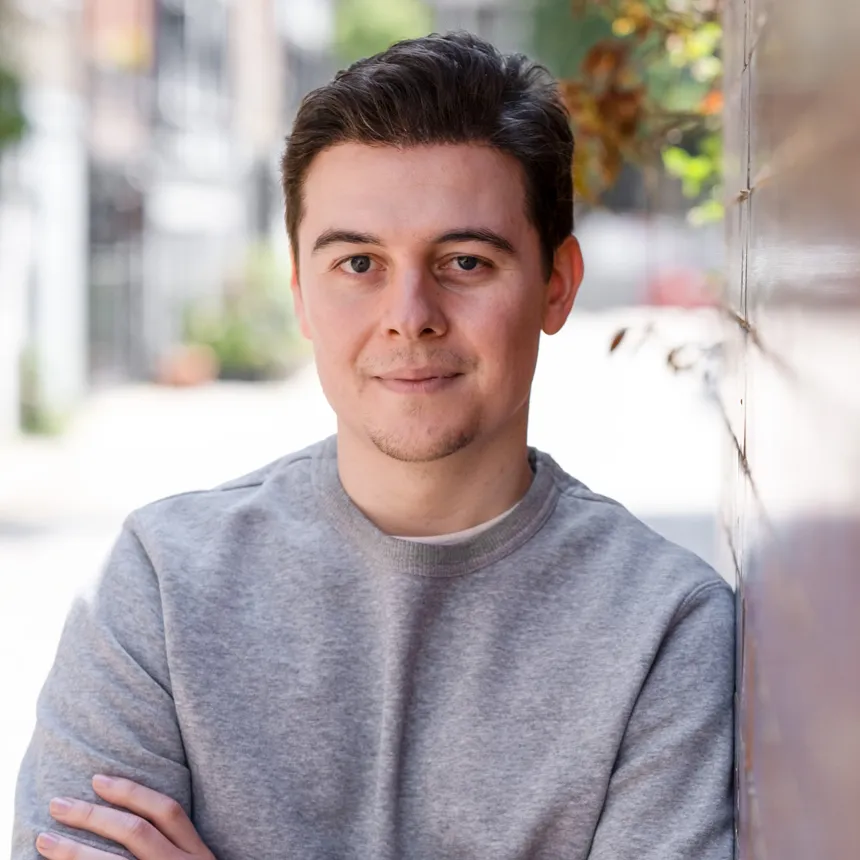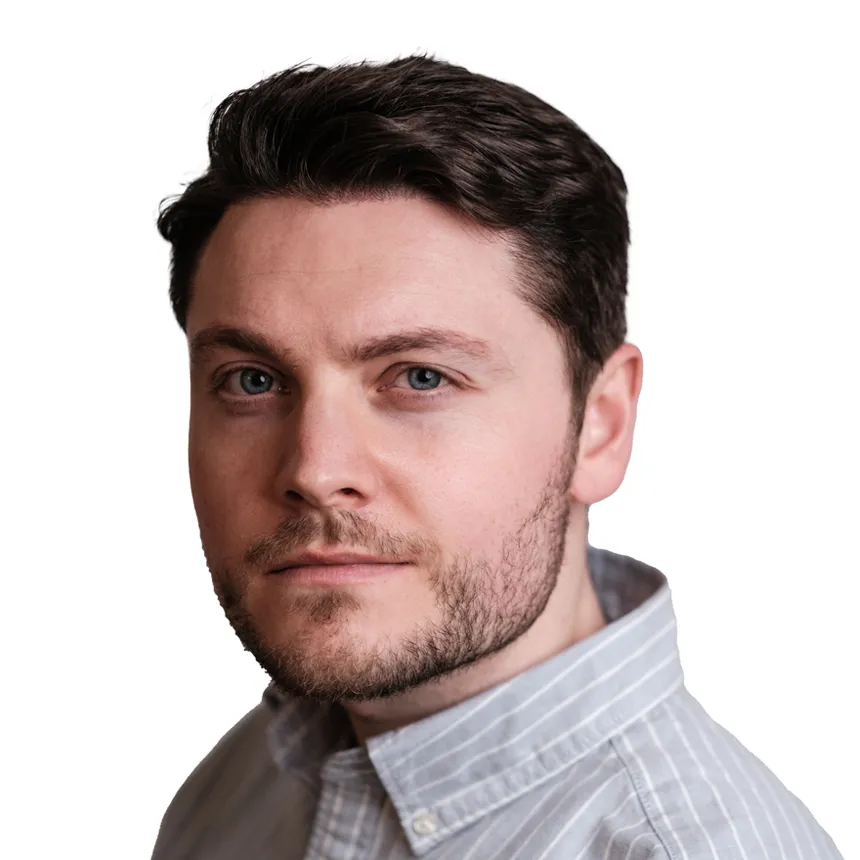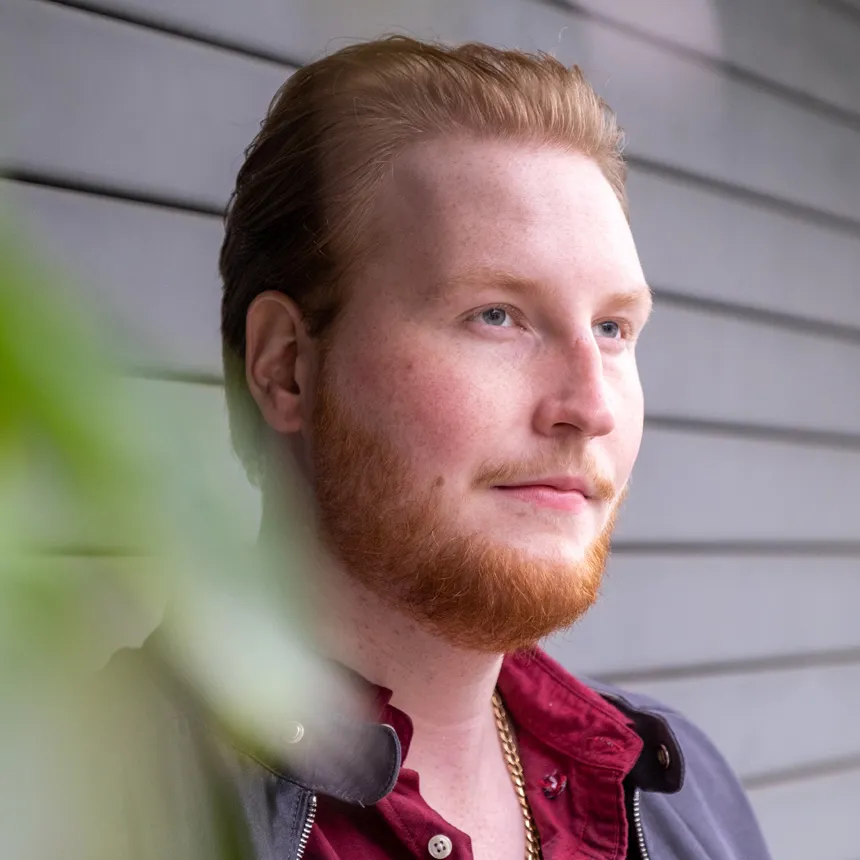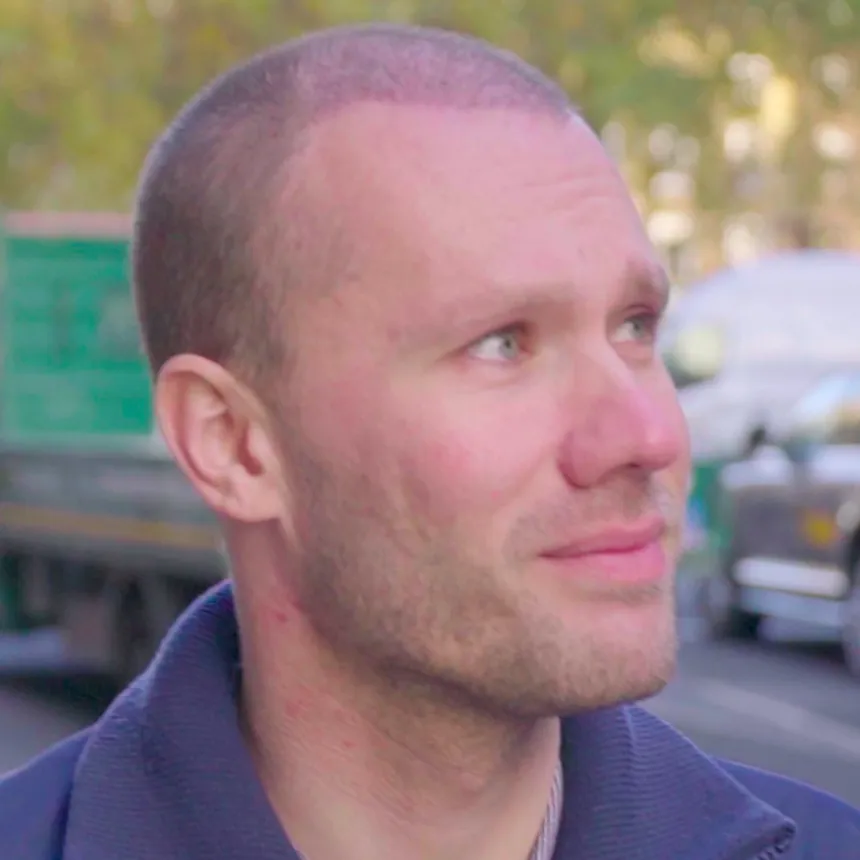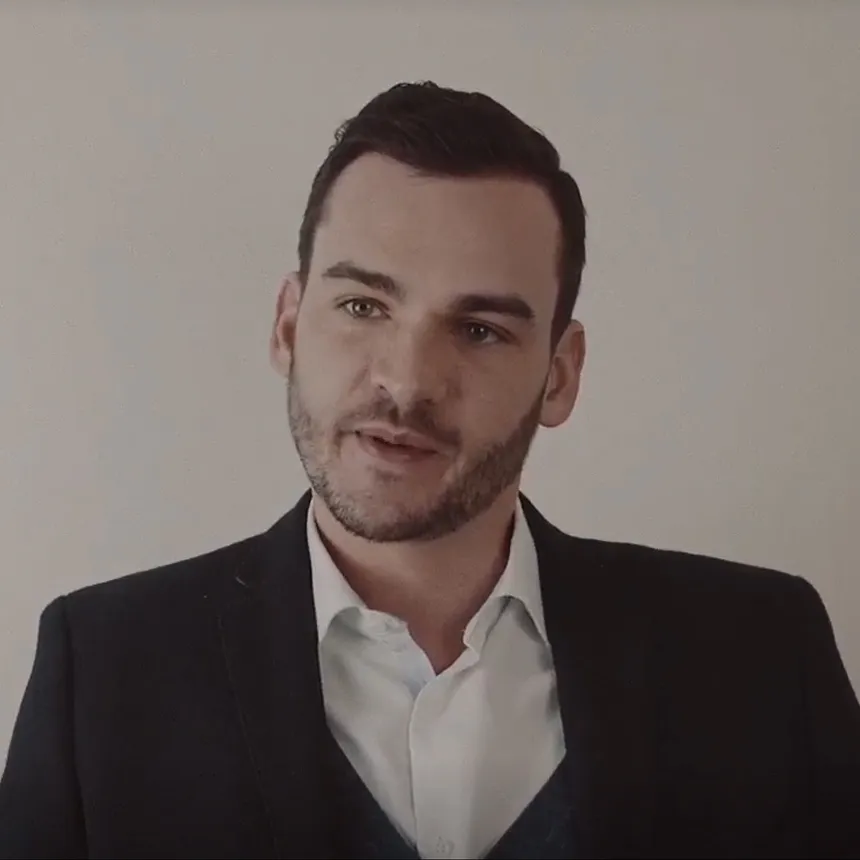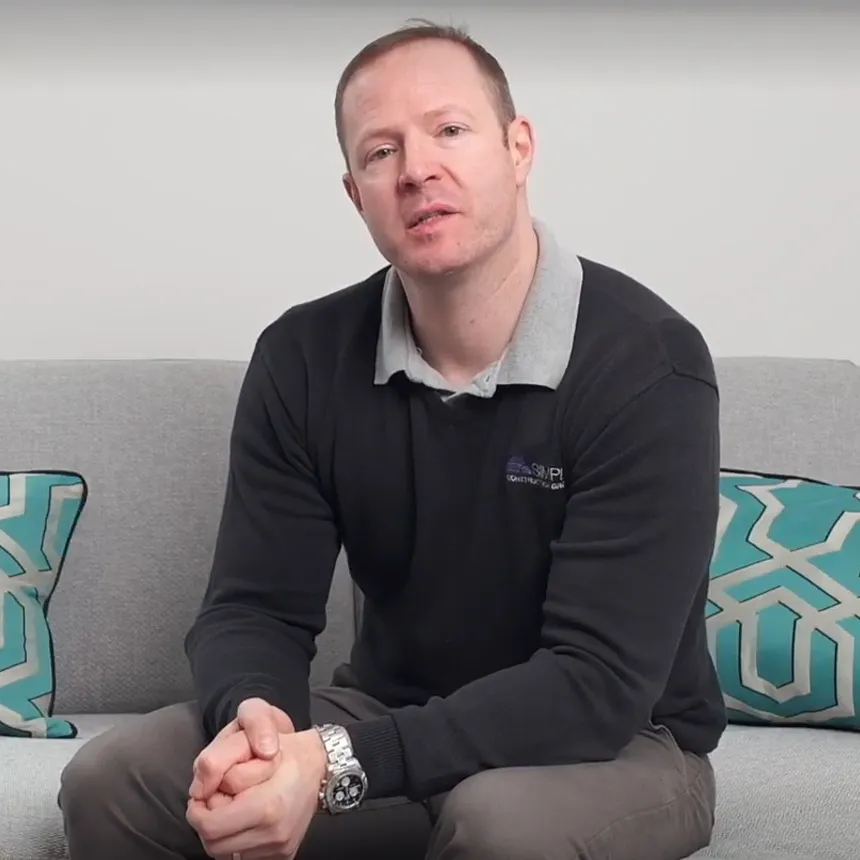

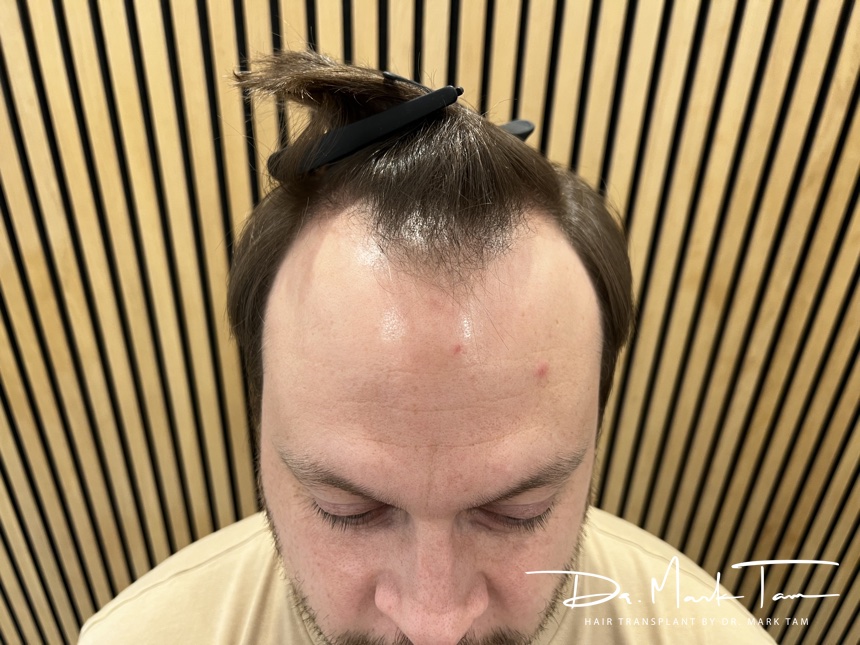
Rob is from Bristol and works for a global immersive exhibition company. Like many young men, he had been disguising his hair loss for many years. Noticing receding at the temples from his late teens into his mid-twenties, he combed his hair forward to camouflage the loss of his hairline.
Feeling courageous and determined to address the issue and improve his confidence, he searched for the best hair transplant surgeons in London and found Dr Mark Tam. The opportunity to check his suitability for hair restoration by completing a free pre-consultation by email was ideal before he travelled from the West Country for an in-person consultation.
Reviewing his case, Dr Tam could see that Rob had suffered a small degree of receding but had always had a slightly high hairline. His hair loss had remained remarkably stable for the last 10 to 15 years. Rob wanted to bring the temple points down, straighten his hairline, and slightly lower the mid-point to achieve a natural result.


On the day of the consultation, Dr Tam completed his Treatment Area Mapping and Measurement (TAM+M) protocol to determine the size of the area required for hair restoration and to provide an accurate calculation of the number of follicular unit grafts he would need to harvest from the donor areas to produce a natural, ultra-high-density result.
Rob remembers how Dr Tam drew a proposed new hairline position on his scalp, allowing them to review and discuss the design together. This was not something he had experienced before when attending other hair transplant consultations; it was a great help. Visualising and correctly calculating a hairline design is routine practice for Dr Tam. It was a real game-changer, allowing Rob to visualise an exact surgical outcome before embarking on the procedure.
The TAM+M process is repeated on the day of surgery to ensure the initial data gathered is relevant and in line with the agreed design.
After reflecting on the new hairline design completed during the consultation, Dr Tam recognises that many patients, when given a cooling-off period, often return with design changes or updates they would like to have considered. When comparing the initial data from the consultation, the data on the day of surgery, and any requested design alterations, this may represent a difference of up to 20% from the overall agreed and recommended treatment plan.
Whilst Dr Tam aims to accommodate any design changes, an increase in the treatment area size also means an increase in the amount of follicular unit grafts required to achieve the desired result at a high-density level; this naturally increases the surgical time and fees involved.
When reviewing Rob’s TAM+M data and hairline design, we agreed to increase the graft number whilst maintaining a high-density transplant goal of 65 grafts per square centimetre. His total treatment area was 45.57 cm2 and would require 2,962 grafts.
DDr Tam’s unique talents lie in the precision of his approach, using customised surgical extraction and transplantation equipment that allows for smaller follicular extraction punches, minimal signs of intervention at the donor sites, and tightly packed implantation insertions using tailored surgical blades. During the surgery, Dr Tam harvested 3,213 grafts from Rob’s donor areas, securing 6,869 hairs, including 477 single-hair follicular units, to create a natural hairline result.
Rob says, “The day I came for my consultation, Mark talked me through everything and asked me if there were any questions. He made sure I knew everything about the procedure. He drew on my hairline to see what I thought, which I hadn't had done with any of them before; no one had drawn a hairline on me when I'd gone for a consultation. I thought that was great. He made me feel welcome. It felt calm and professional. It was really important for me to meet the surgeon who was going to be doing it, whereas there are some other places that you can go to that don't do that. I just remember when I left, I thought that's who I wanted to do my hair transplant.”
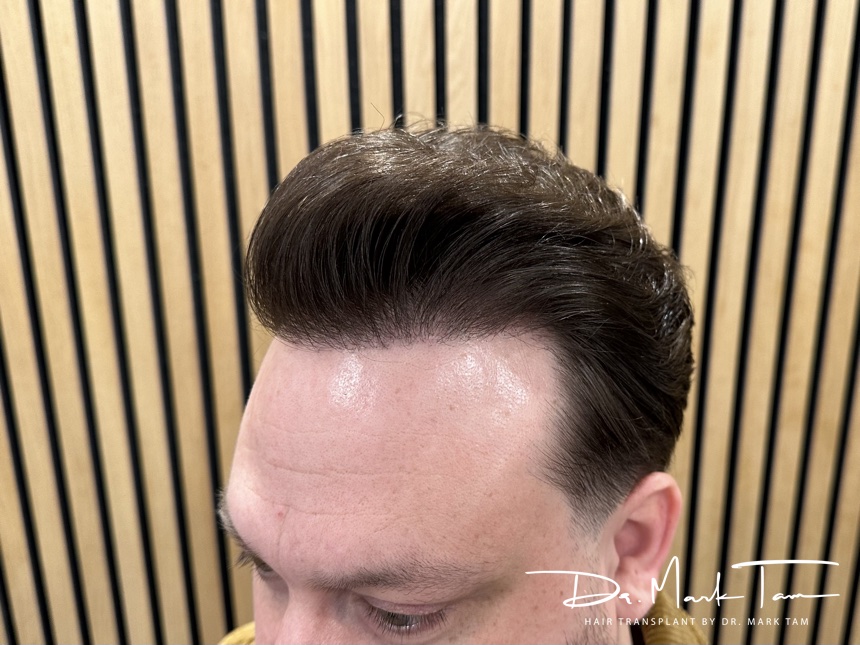
By achieving ultra-high density with the number of harvested grafts, Dr Tam could lower Rob’s hairline, and the result looks very natural.
Rob feels so much better after his hair transplant. He is no longer worried about having his photograph taken. It was always in the back of his mind that his hair wasn't quite right; it impacted his confidence when he left the house. He always felt a certain level of paranoia that people were looking at his head and his hair.
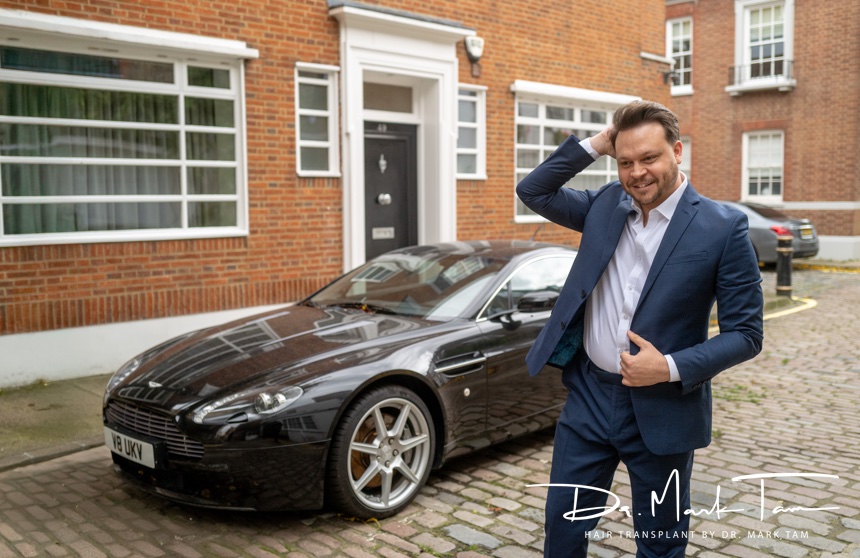
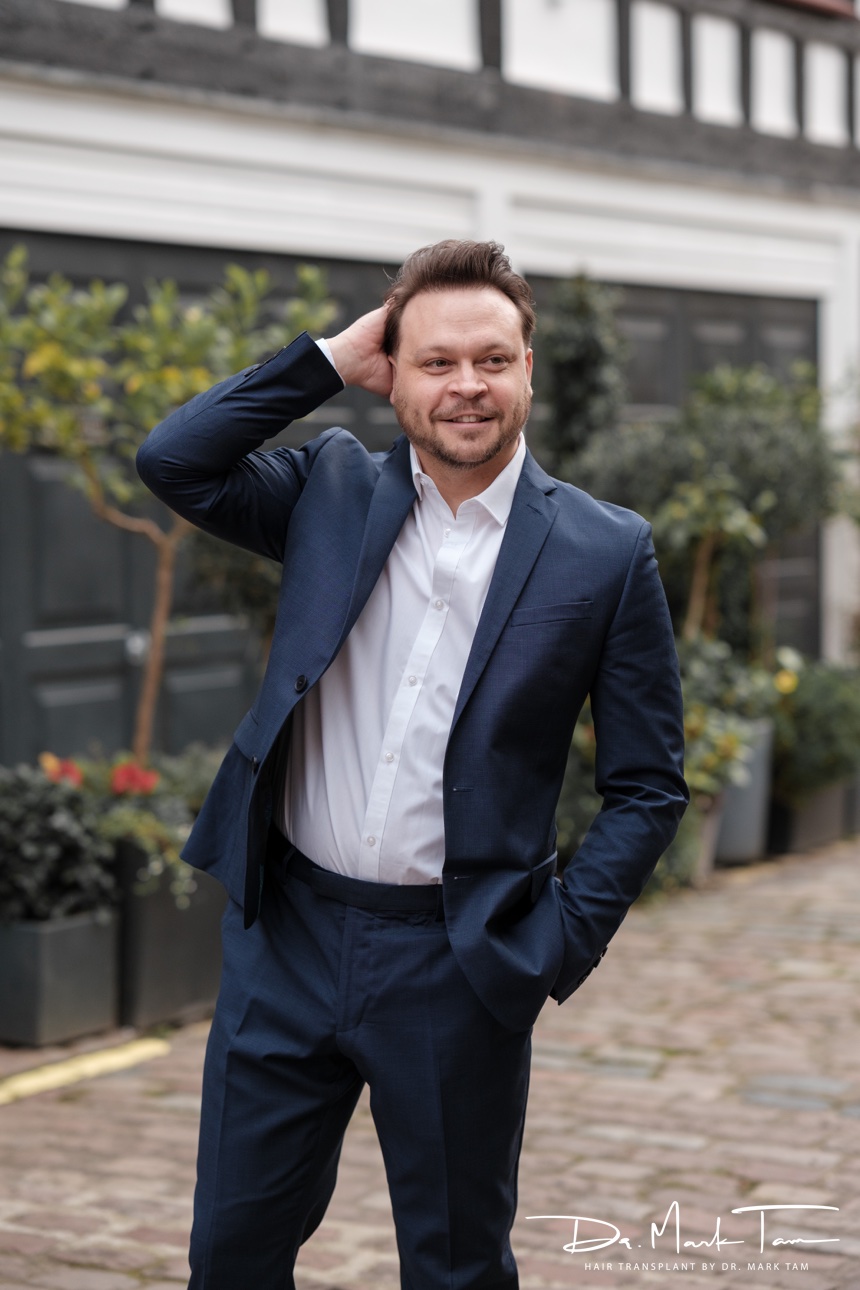
Since the hair transplant surgery, his life has changed dramatically. Rob has gone from constantly thinking and worrying about his hair loss, moving his hair from left to right to ensure he was adequately hiding the tell-tale signs, to not thinking about it at all. Now, he can confidently show off his new hairline.







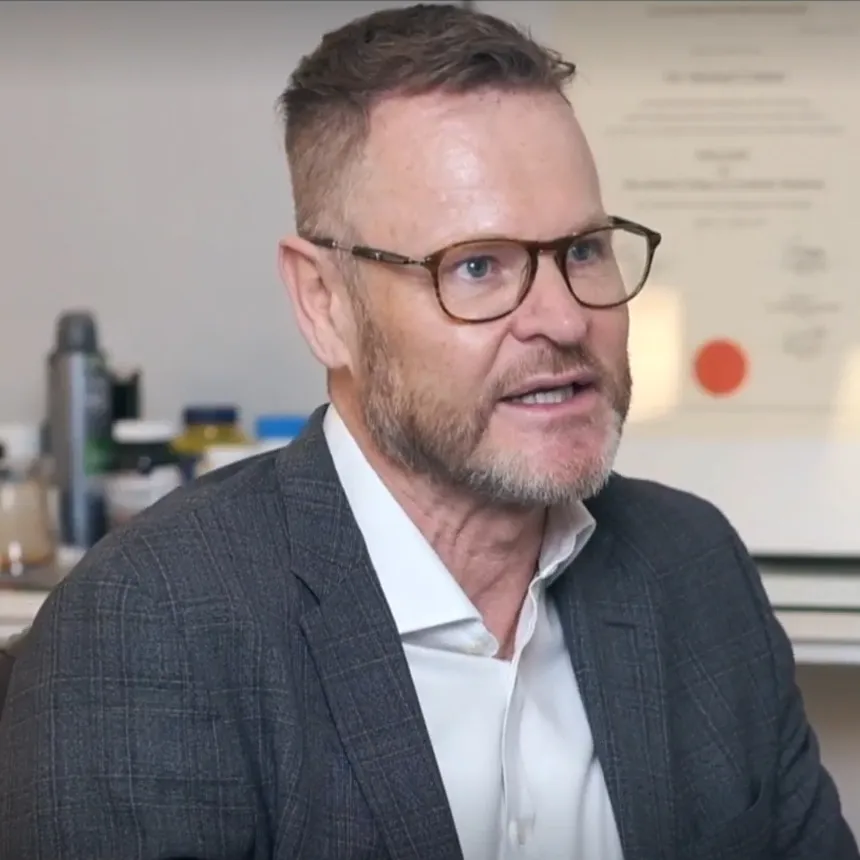
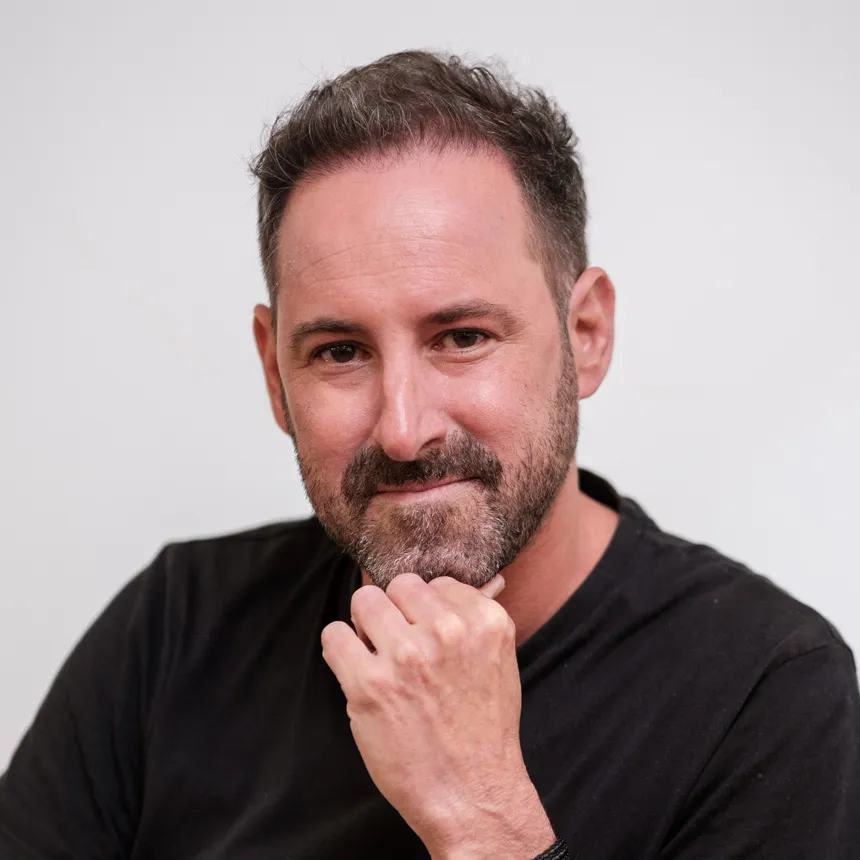
Dr Mark Tam explains the benefits of an assessment.

* - Required field