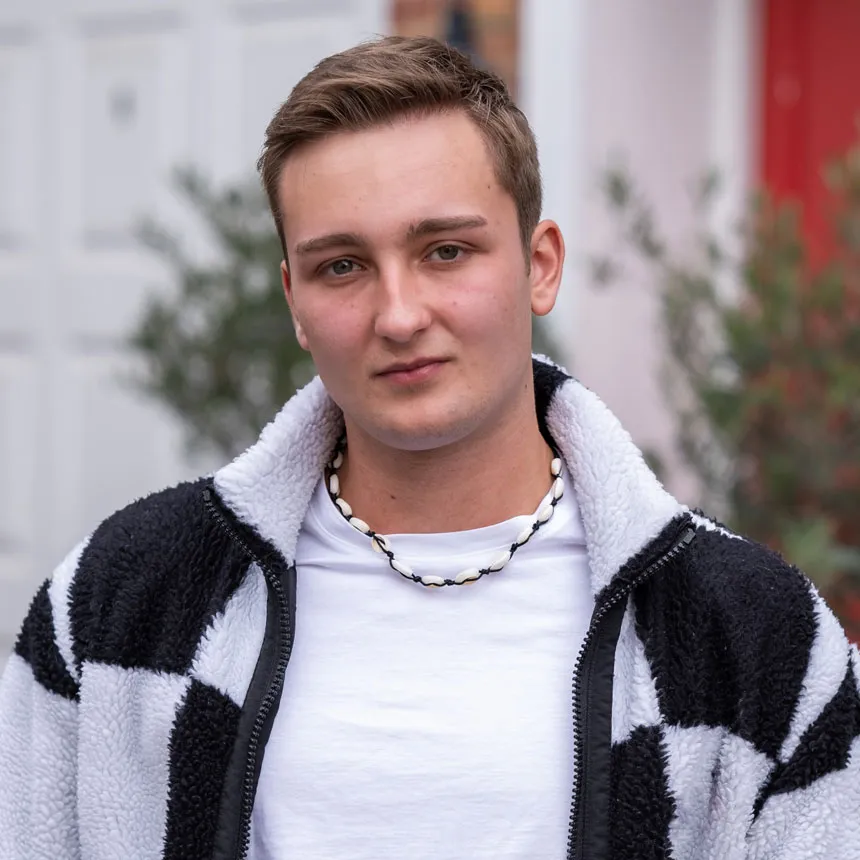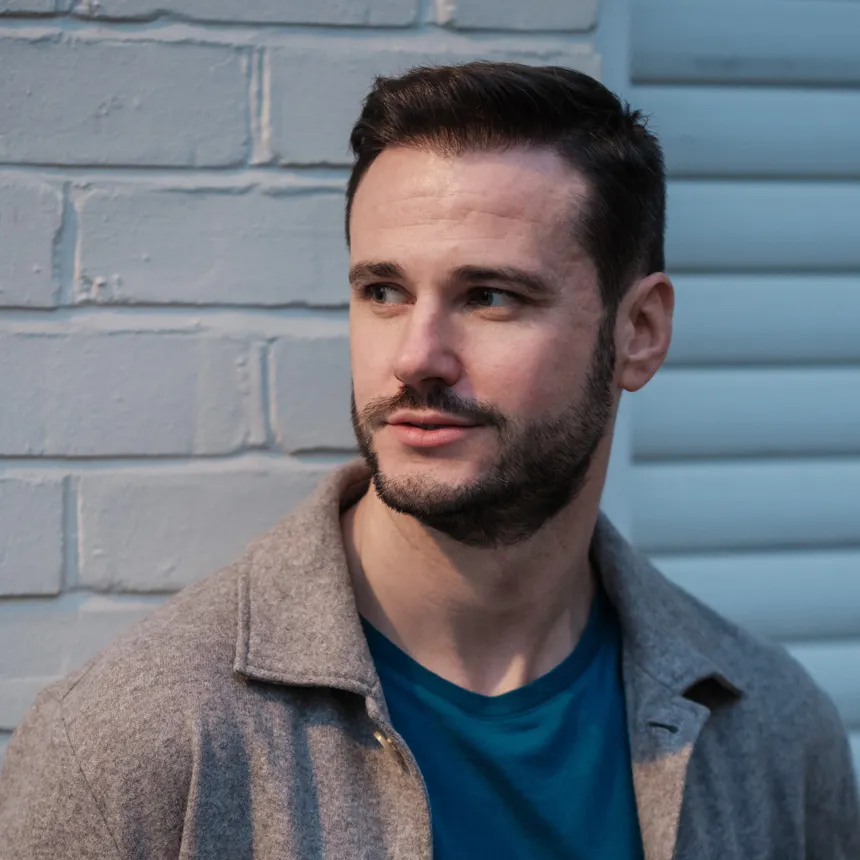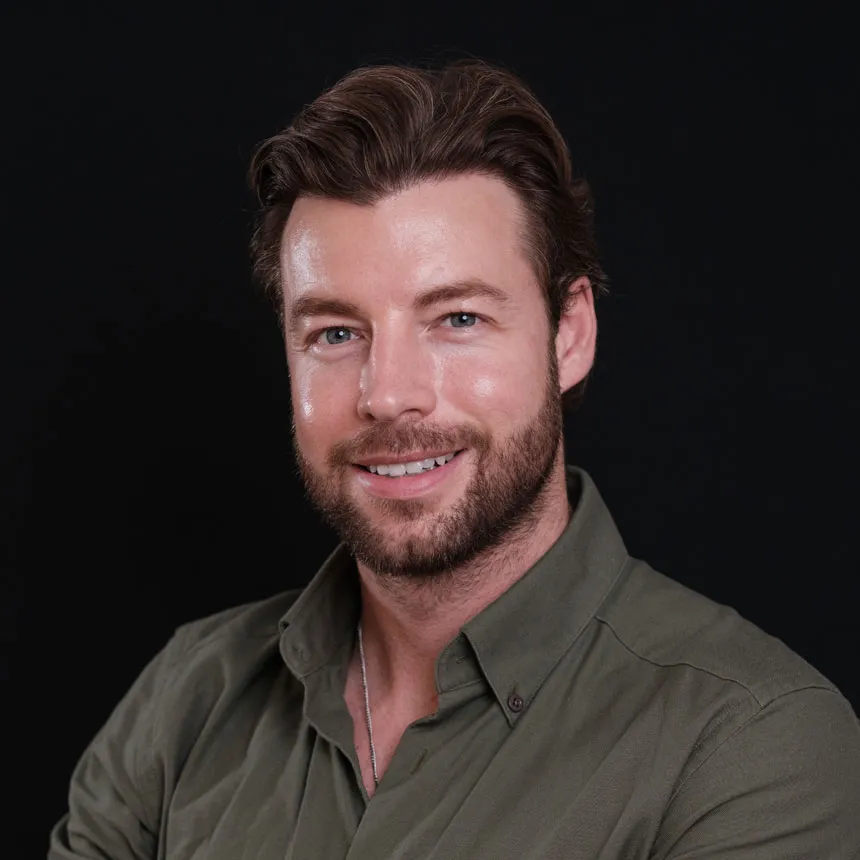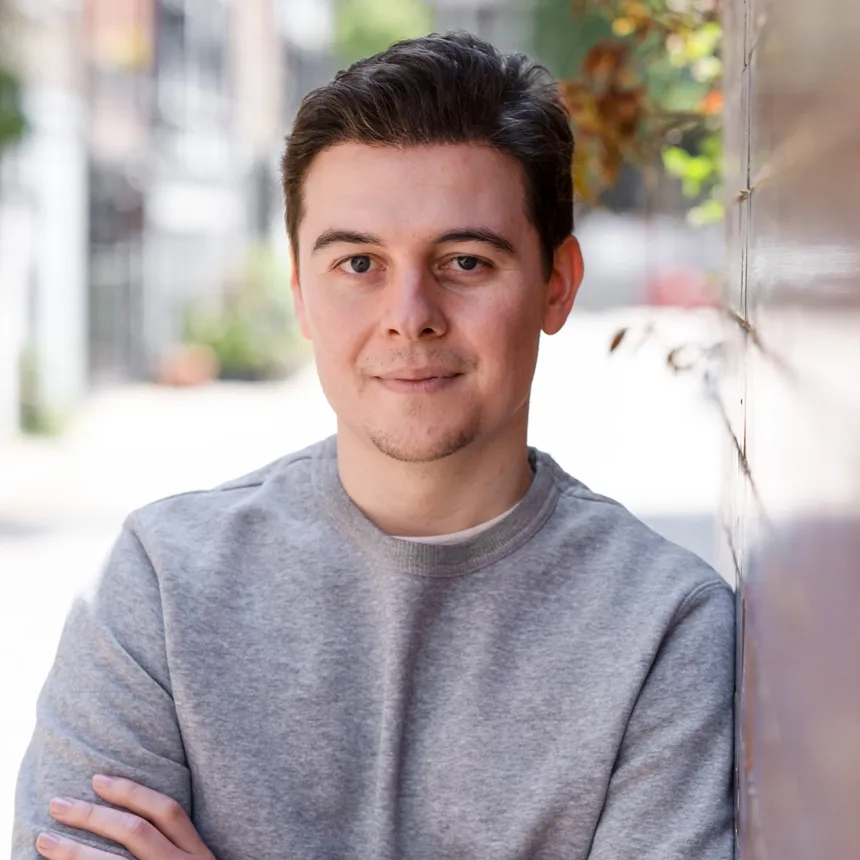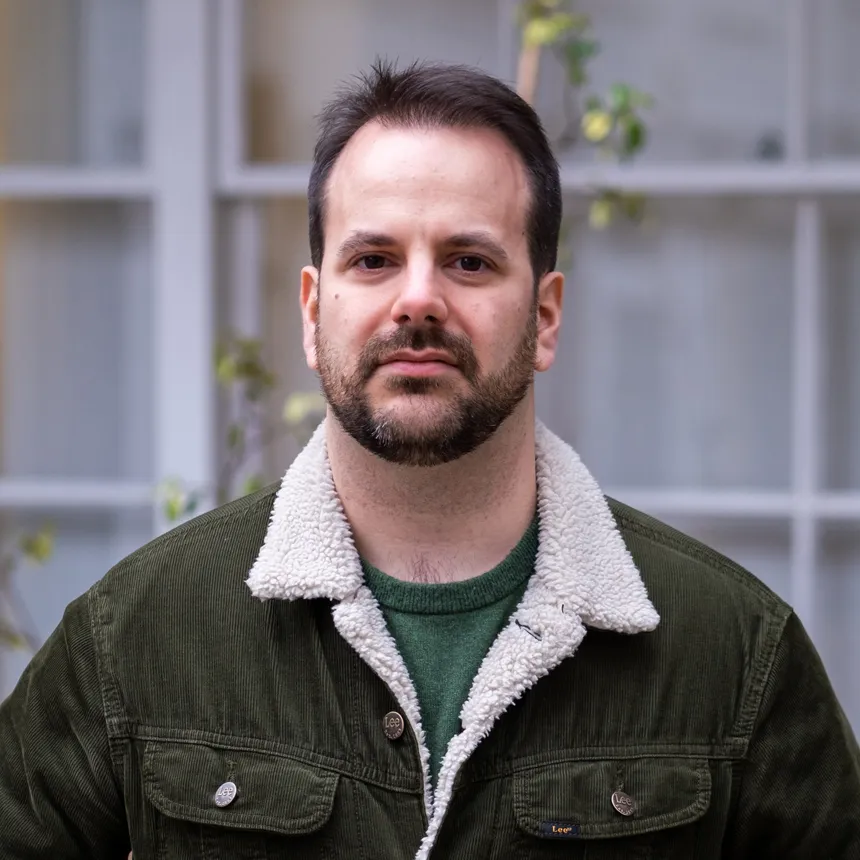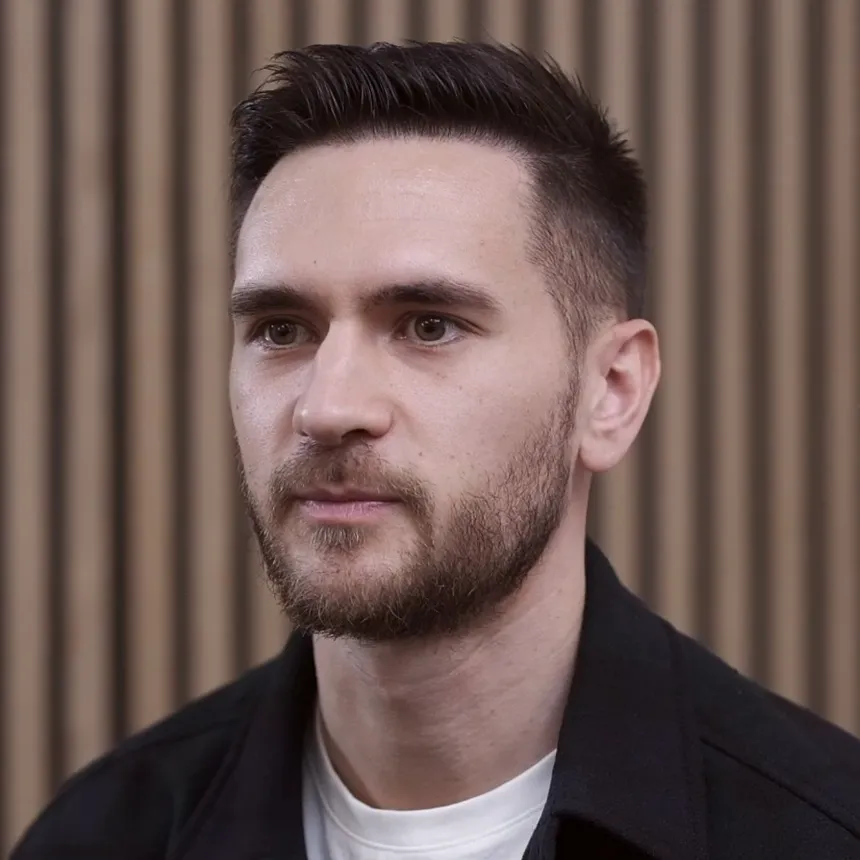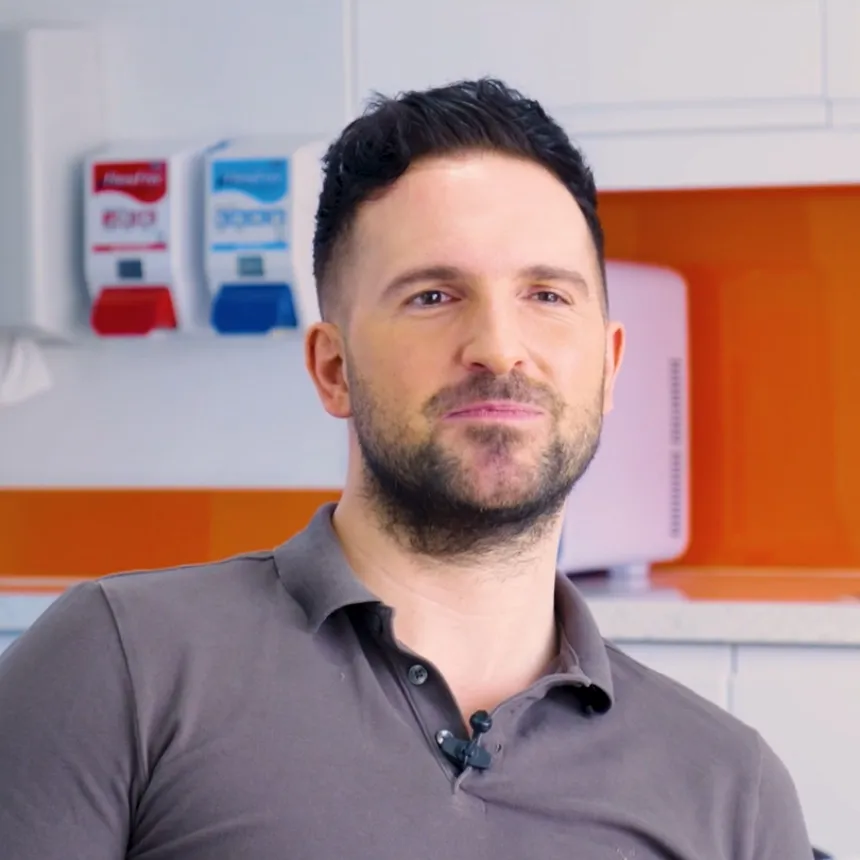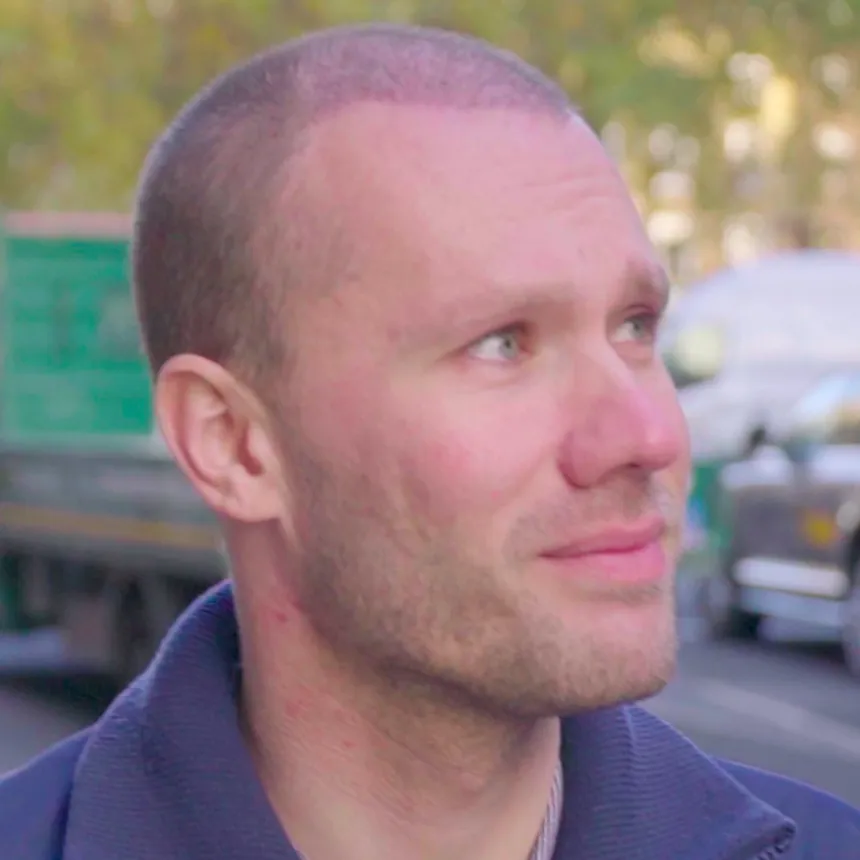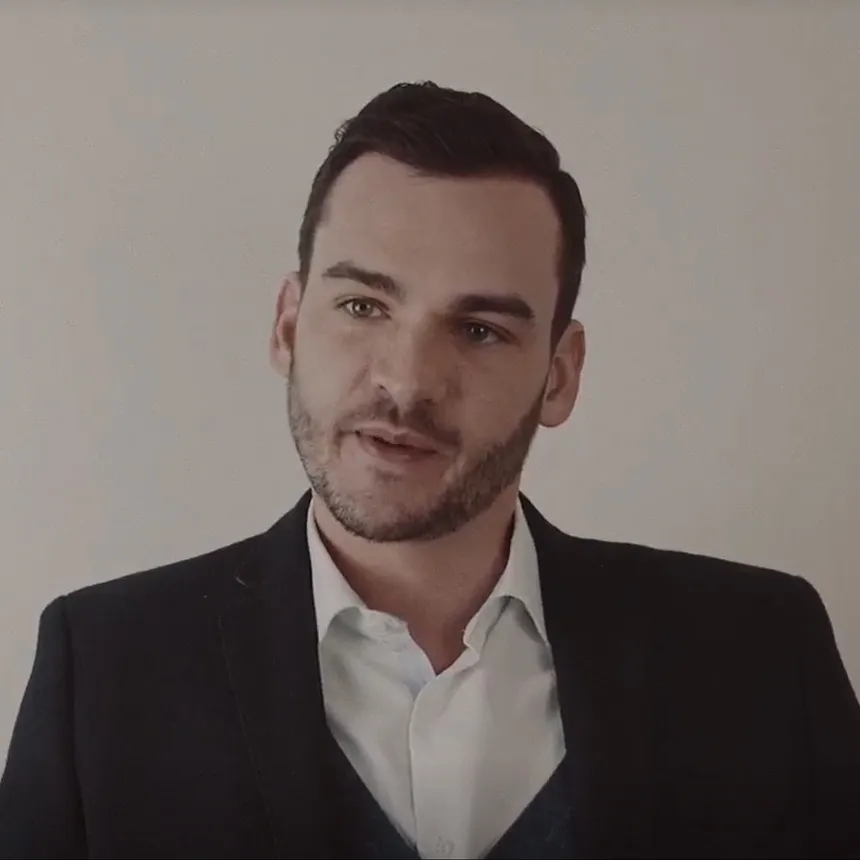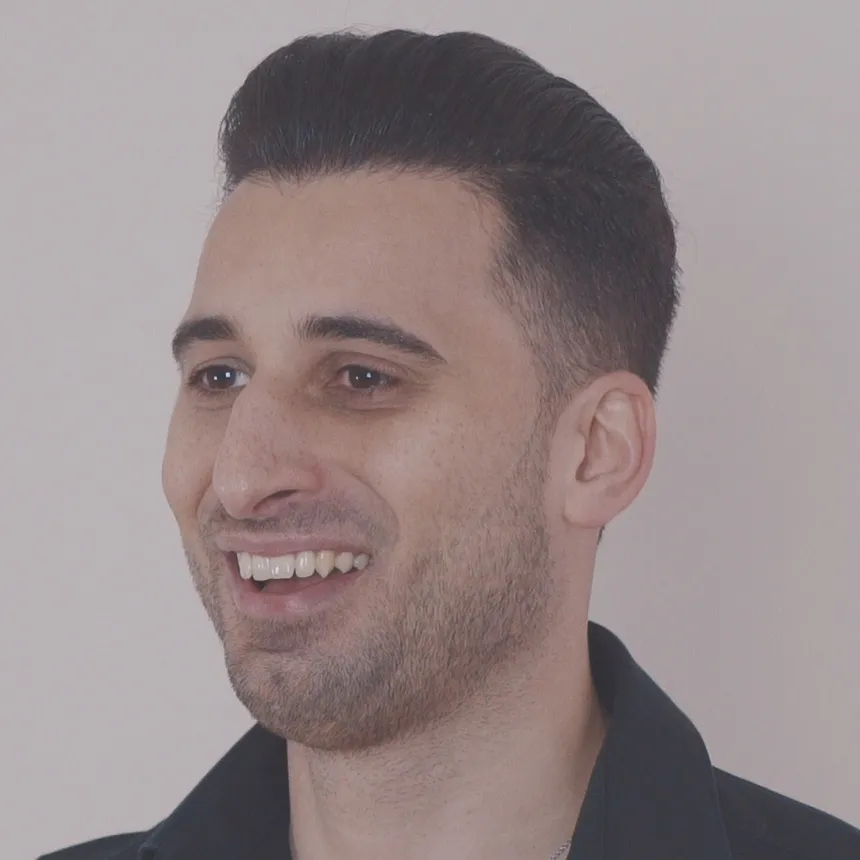
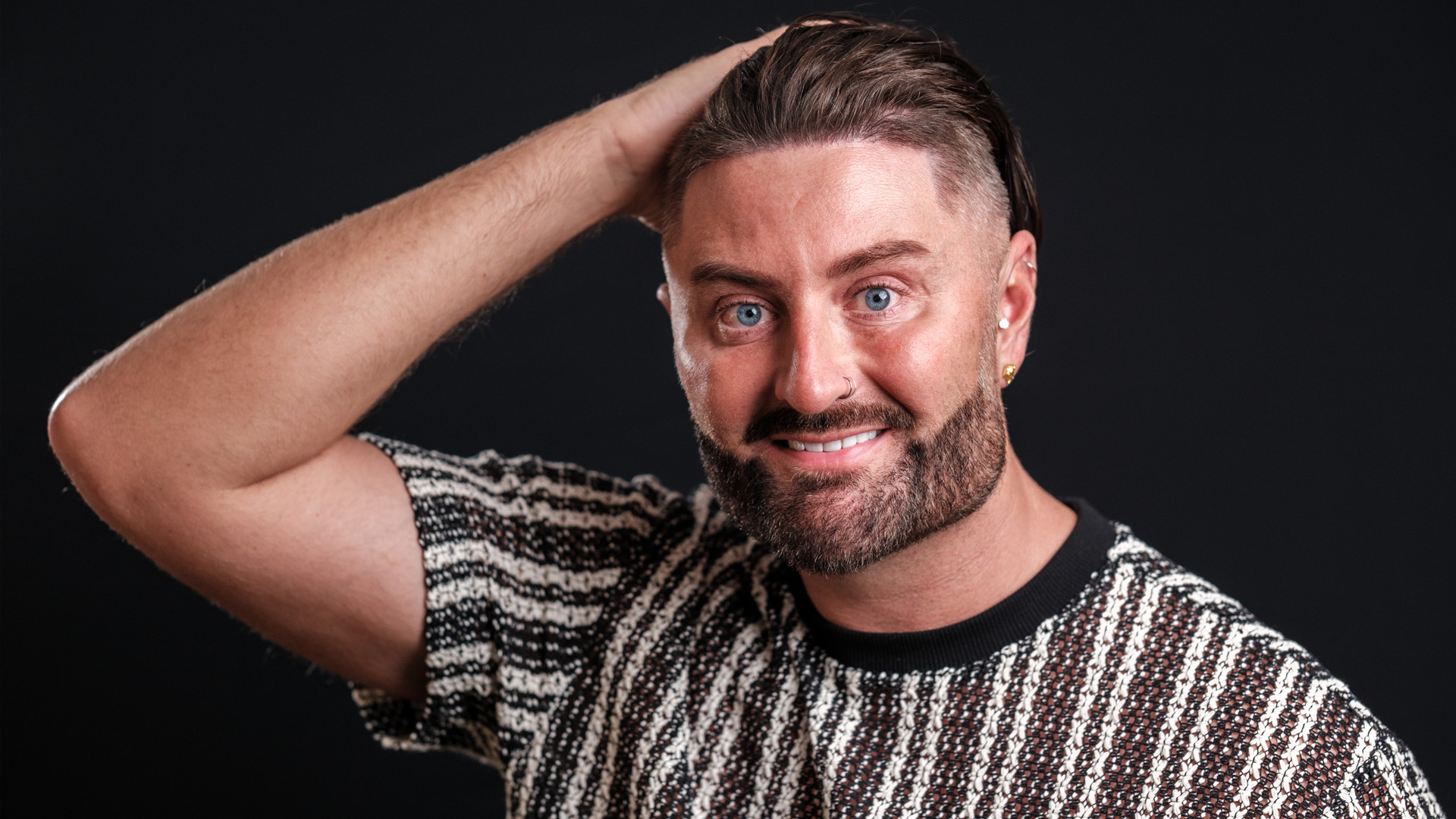
Danny has been a successful barber for over twenty years. During that time, he has observed that his customers have started talking more openly about male hair loss and receding hairlines, many asking him about ways to cut their hair to hide or cover their hair loss or discussing treatments they have tried.
In 2016, he started to notice his own hair loss. Around his mid-twenties, Danny became more self-conscious, especially when those around him, whom he saw every day, began to point it out – the irony was not lost on him, given that he worked in the barbering sector, where all you talk about is hair.
Danny then began his journey seeking solutions for his hair loss, trying several hair restoration options, including anti-hair loss medication, platelet-rich plasma (PRP) therapy, and an unsuccessful hair transplant at another clinic. Never quite realising the results he was hoping to achieve, he was disappointed and frustrated. Encountering more and more customers in the barbershop on similar journeys – also with good and bad tales to tell about hair transplant surgeries and their results – the desire to choose the right path with the right hair transplant surgeon, with the reassurance of a great result was uppermost in his mind.
One day at work, his colleagues were watching content on Instagram and happened upon a video by Dr Mark Tam. Danny was instantly drawn to Dr Tam's friendly, professional, and informative nature as he explained his craft during the video. Danny thought the option to complete a free online pre-consultation screening to check suitability for hair transplant surgery was a great way to get the ball rolling again and to find out if he could overturn his underwhelming achievements thus far. A few weeks and email conversations later, he was pleased to be a suitable candidate and attended a full consultation at the Harley Street clinic. Danny started his hair restoration journey with Dr Mark Tam in 2022.
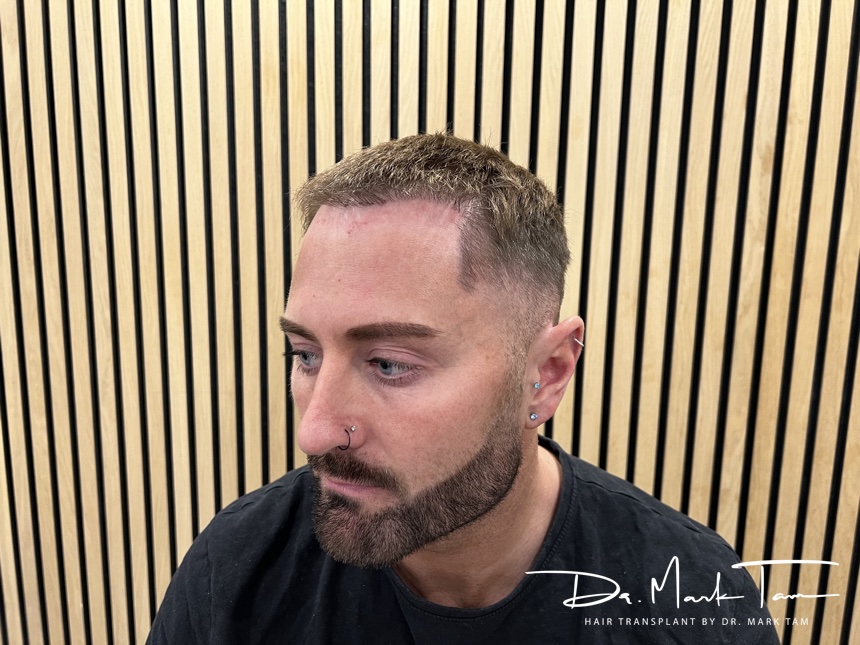
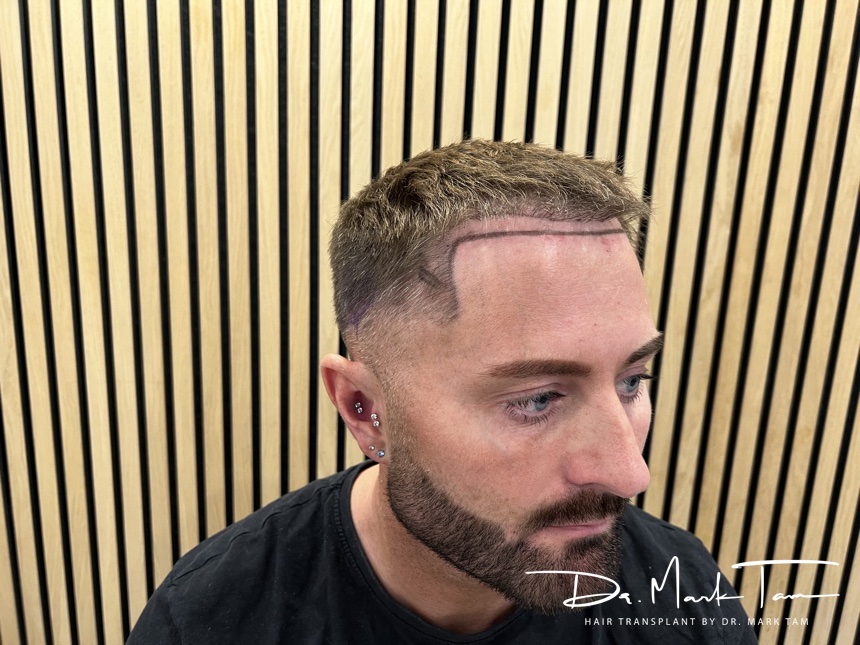
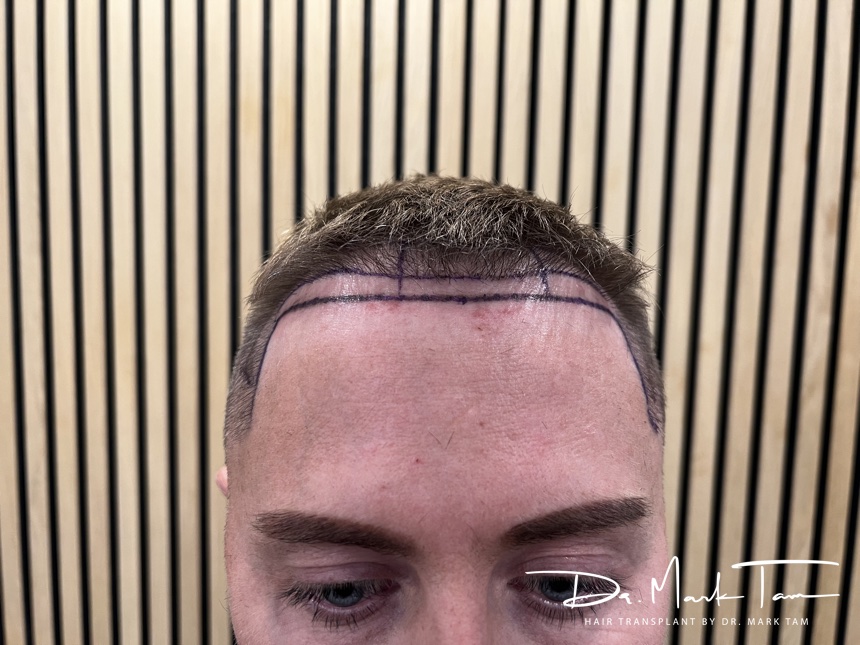
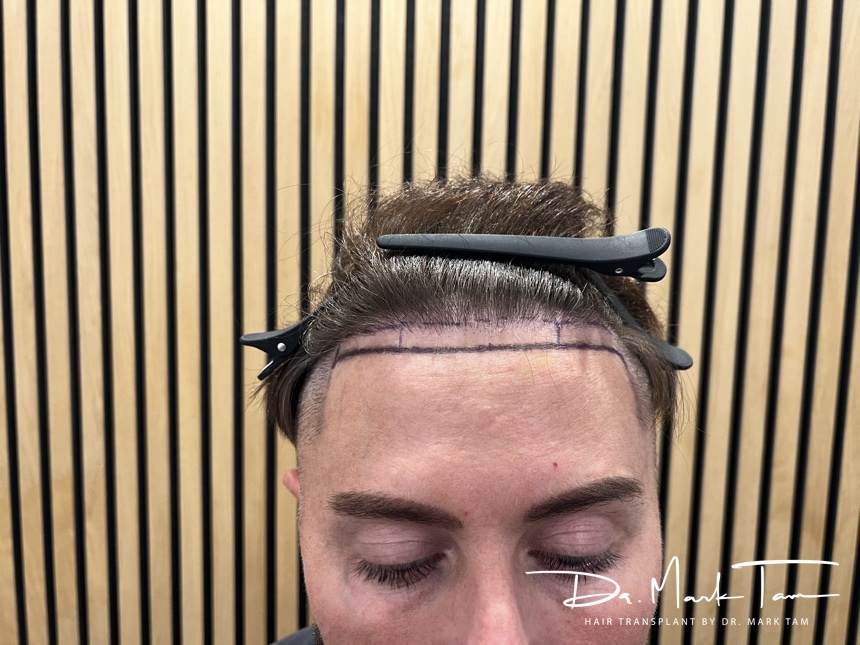
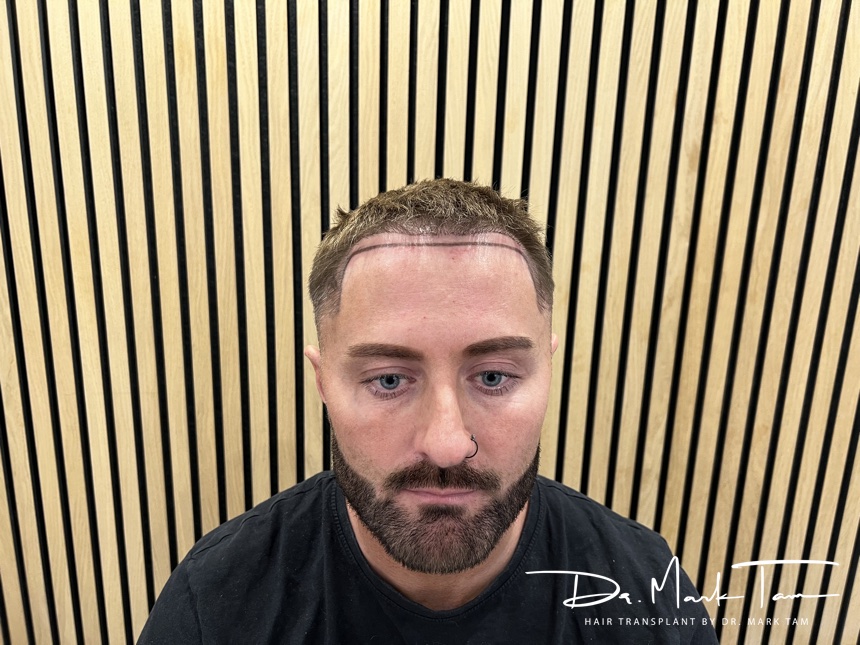
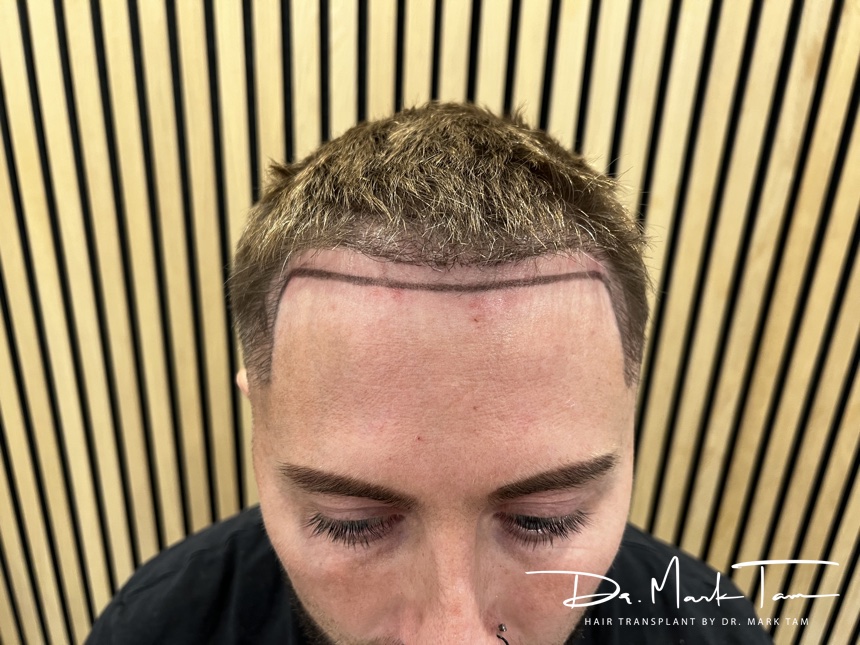
Danny knew exactly what he wanted to achieve from hair restoration, discussing it at length with Dr Tam during their face-to-face consultation. The hair transplant surgery would focus on creating a lower and straighter hairline, alongside adding to his temple points.
When lowering a hairline, especially where there is significant receding, it is vital to approach it conservatively rather than bringing it down too low in a single surgery. Too much in one go can lead to under-filled or sparse results if the follicular unit grafts harvested and prepared are too few, resulting in them being too widely spread apart. A more measured approach is to lower the hairline in stages to maximise graft placement at each stage and allow for ultra-high-density placement along the hairline for optimal appearance. Dr Tam places more grafts per cm2 than many other hair transplant surgeons, using custom-made, finer surgical tools and specialised graft preparation methods. By taking a stepped approach to hairline lowering, the appearance of the hairline looks and feels more natural after each stage. You will see significant visible improvement a year after each intervention, without appearing like a 'work in progress' or having to live with an unfinished, sparse look that requires a remedial touch-up due to gaps from lowering the hairline too rapidly.
Using Treatment Area Mapping and Measurements (TAM+M), Dr Tam determines the exact size of the treatment area to meet the hairline aspirations, the various segments to address for each part of the staged process, and the number of grafts required to achieve an ultra-high-density, natural result at each step.
During the initial hair transplant procedure, 2,750 follicular unit grafts were extracted from Danny's donor areas and used to transplant 5,713 hairs, including 620 single hair follicles, critical for restoring a natural-looking hairline. Using the IDEAL Technique, grafts are harvested and prepared to create individually separated hair follicles from multi-hair units. If you look closely, you will see that a natural hairline consists of many singular hair follicles at the front of the scalp, with multi-hair follicles more prevalent further back from the face. When restoring a hairline, it is vital to mimic this during transplantation to avoid hair looking clumpy and to ensure it flows in a natural direction when combed or run through with the fingers.
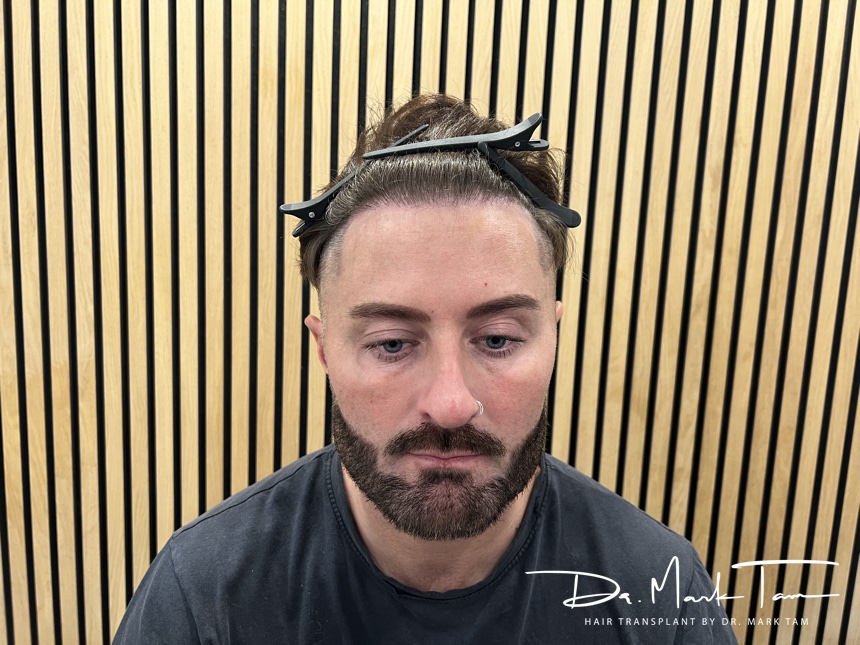
Danny was thrilled with the results from his initial treatment, which had addressed his receding hairline, but he decided that he wanted to opt for a second surgery to bring his hairline even lower. With stable, managed hair loss and a donor area preserved in good, harvestable condition after his first surgery, a second surgery could be undertaken.
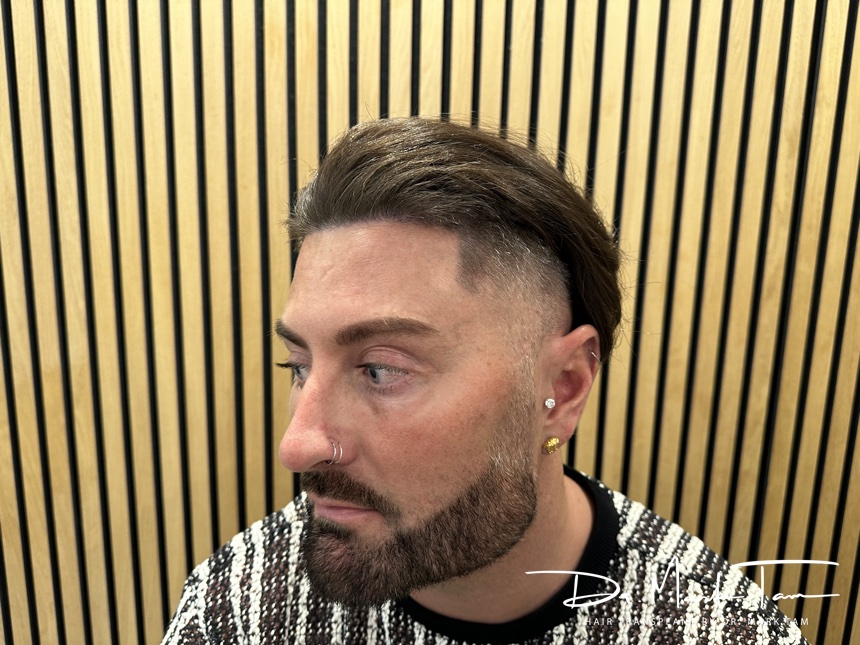
To achieve Danny’s hairline desires and successfully create the lowered design, the second procedure involved extracting a further 1,406 grafts, totalling 2,948 hairs, including the preparation of 350 single hair follicles.
Dr Tam employs specialised, low-impact follicular unit extraction (FUE) methods, including regenerative harvesting techniques like partial FUE and smaller FUE extraction punches to manage and preserve the viability of donor areas.
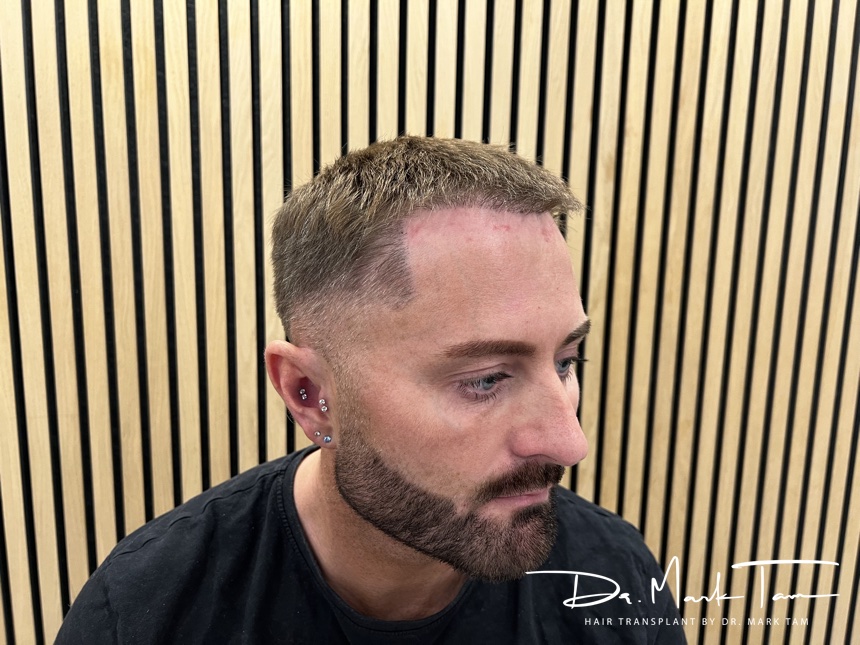
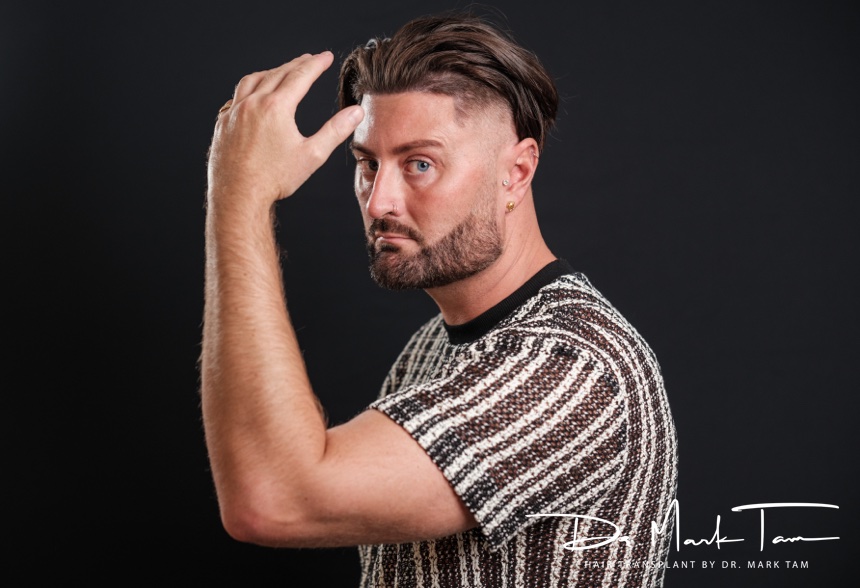
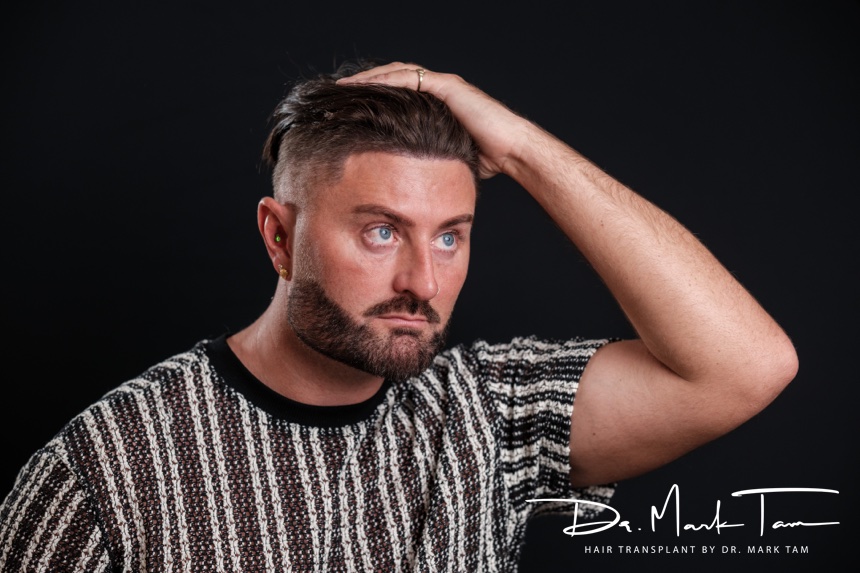
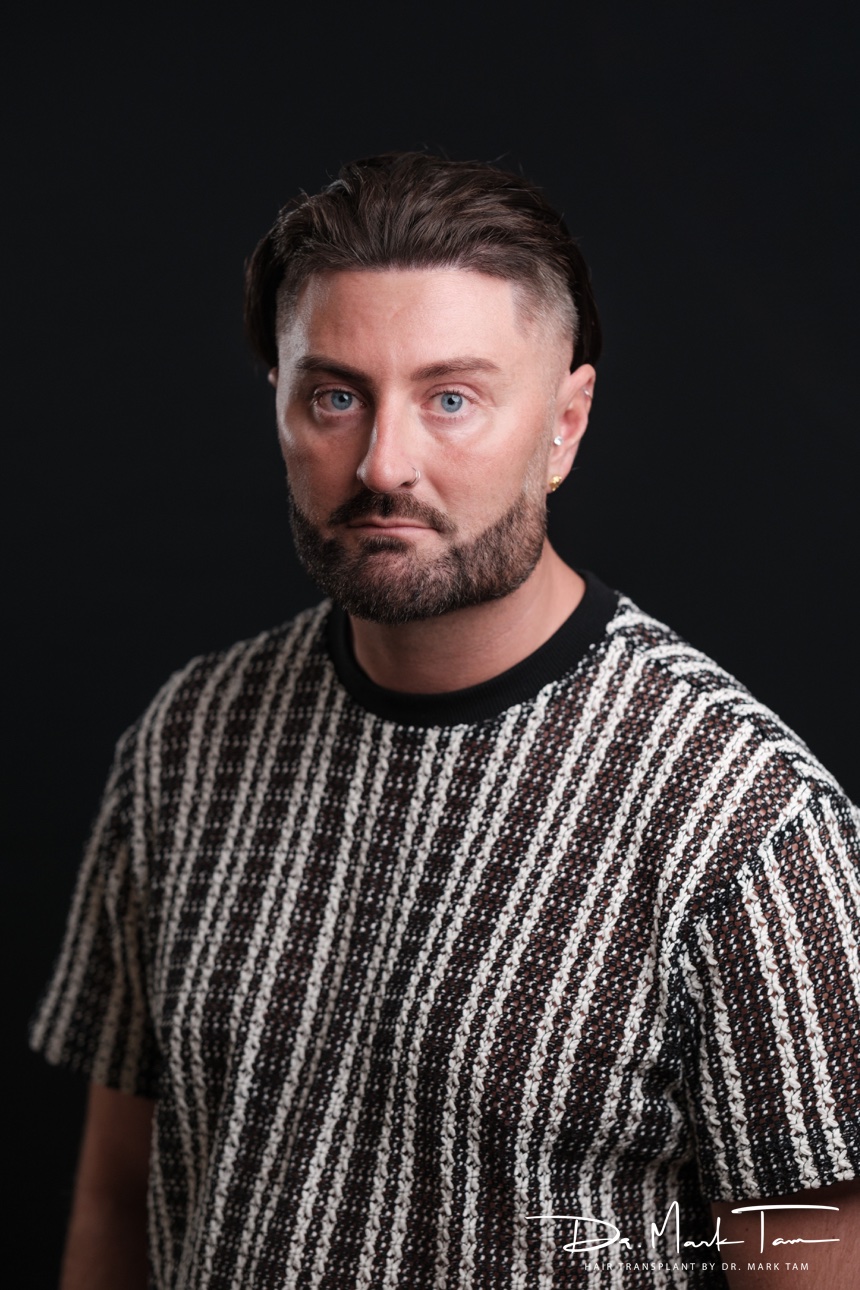
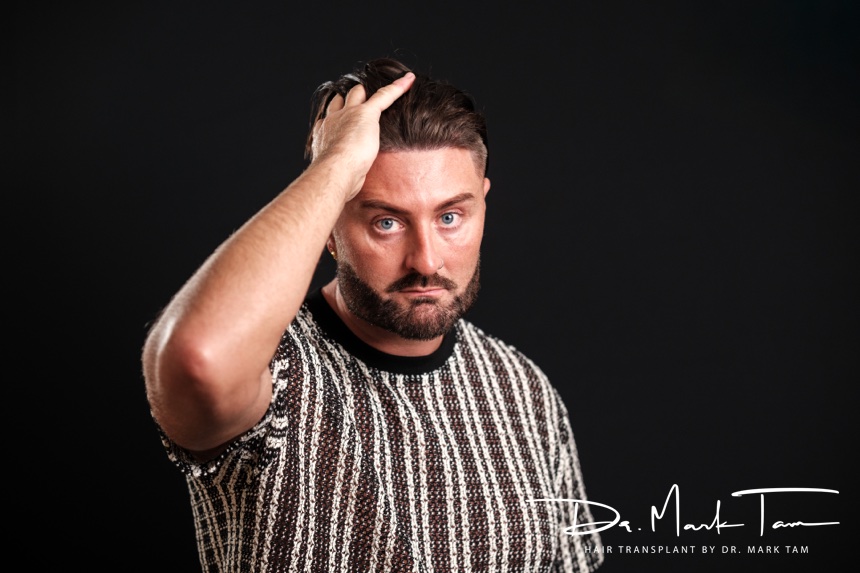
Donor area management is crucial. Dr Tam ensures he pays just as much attention to the graft harvesting sites as the implantation areas to minimise trauma to the scalp and mitigate potential scarring. By guaranteeing future donor viability, there is always the option to revisit the area should a patient want further intervention after their initial procedure, be advised of a stepwise approach to achieving their goal, or indeed experience additional or new hair loss some years later. With low-impact methods used in the donor site(s), there are fewer visible signs of intervention to the back and sides of the head, allowing the freedom to choose shorter hairstyles. Danny favours a longer-on-top and shorter-at-the-sides hairstyle, and thanks to Dr Tam’s unique precision and attention to detail during surgery, it’s difficult to tell that he has had a hair restoration surgery.
Danny says, “…the next six months after the hair transplant, it was getting better every day. I found myself looking in the mirror nearly every day, excited. It takes twelve months to get the end result, but at six months, for me, it was fantastic.”
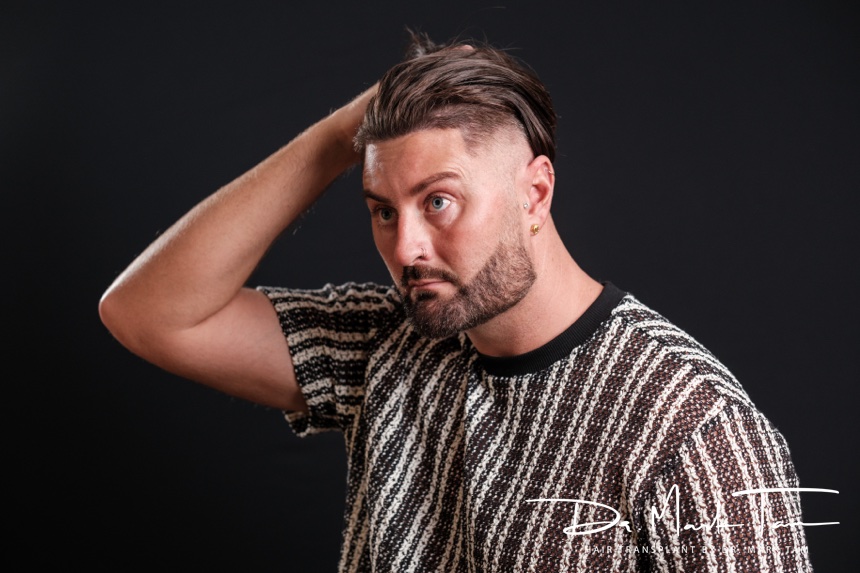
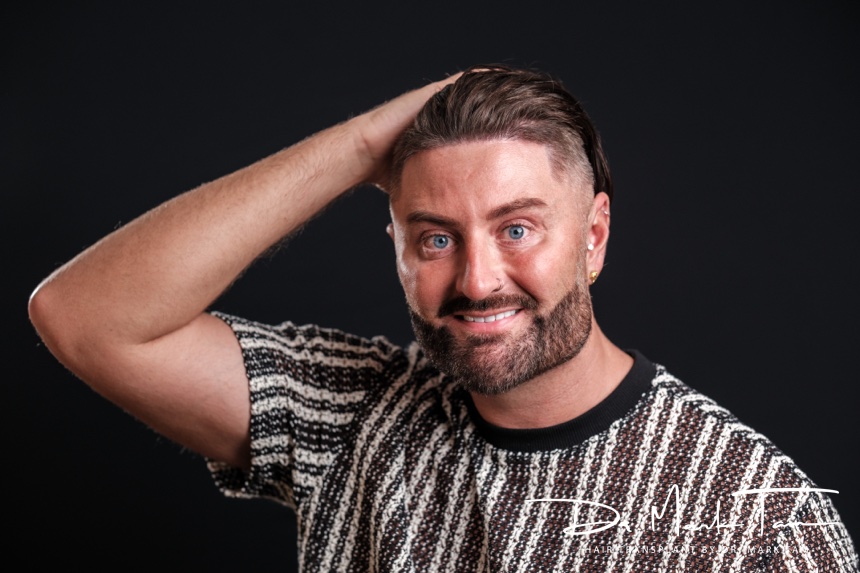
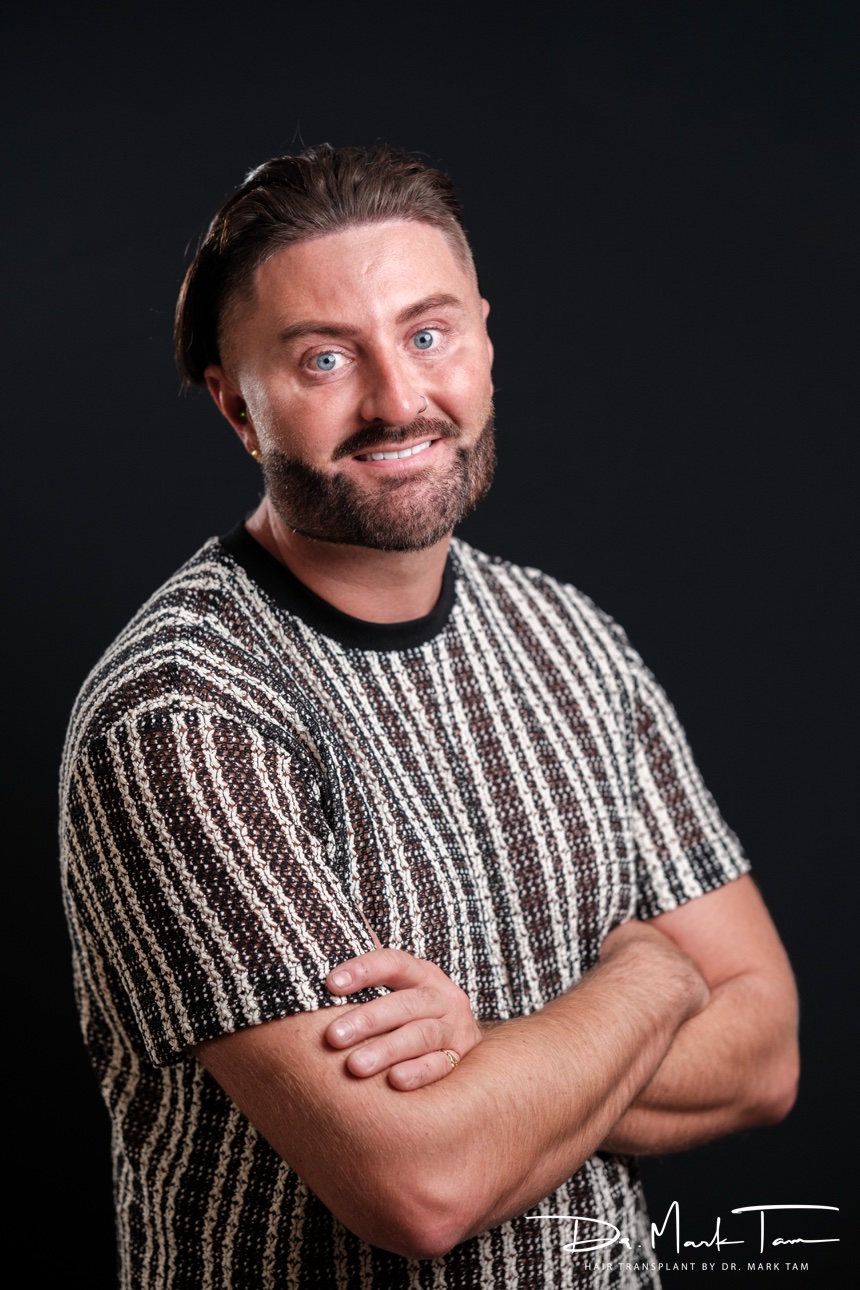
Just over a year after his second hair transplant procedure, Dr Tam has successfully created the much lower hairline that Danny desired without compromising on a high-density result. It looks and feels natural all along the hairline.
The choice of hairline positioning is very personal to each individual patient, and Dr Tam spends considerable time discussing the options in detail, using the TAM+M data to create reliable parameters for success. For his hair restoration, Danny was keen to realise a much lower hairline than others may choose and opted for a second-stage surgery following his initial result; patient preference is key.
As a barber, Danny knows more than anyone what he wants from his hairline and hairstyle. His chosen design is of standout importance to him, and I think you will agree he has a fantastic result.





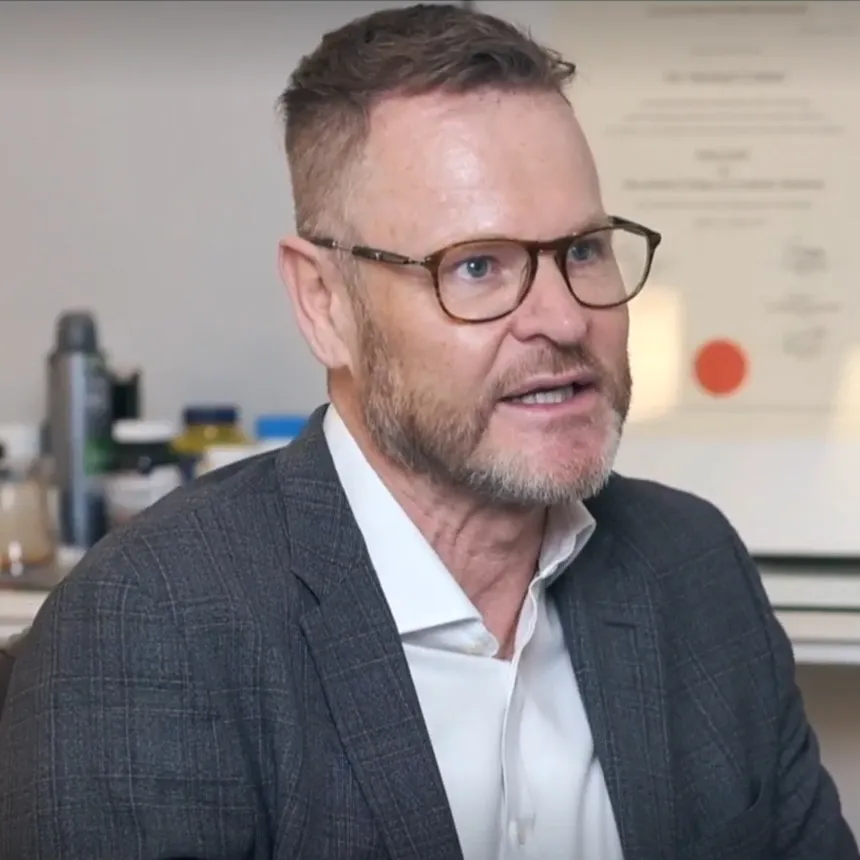
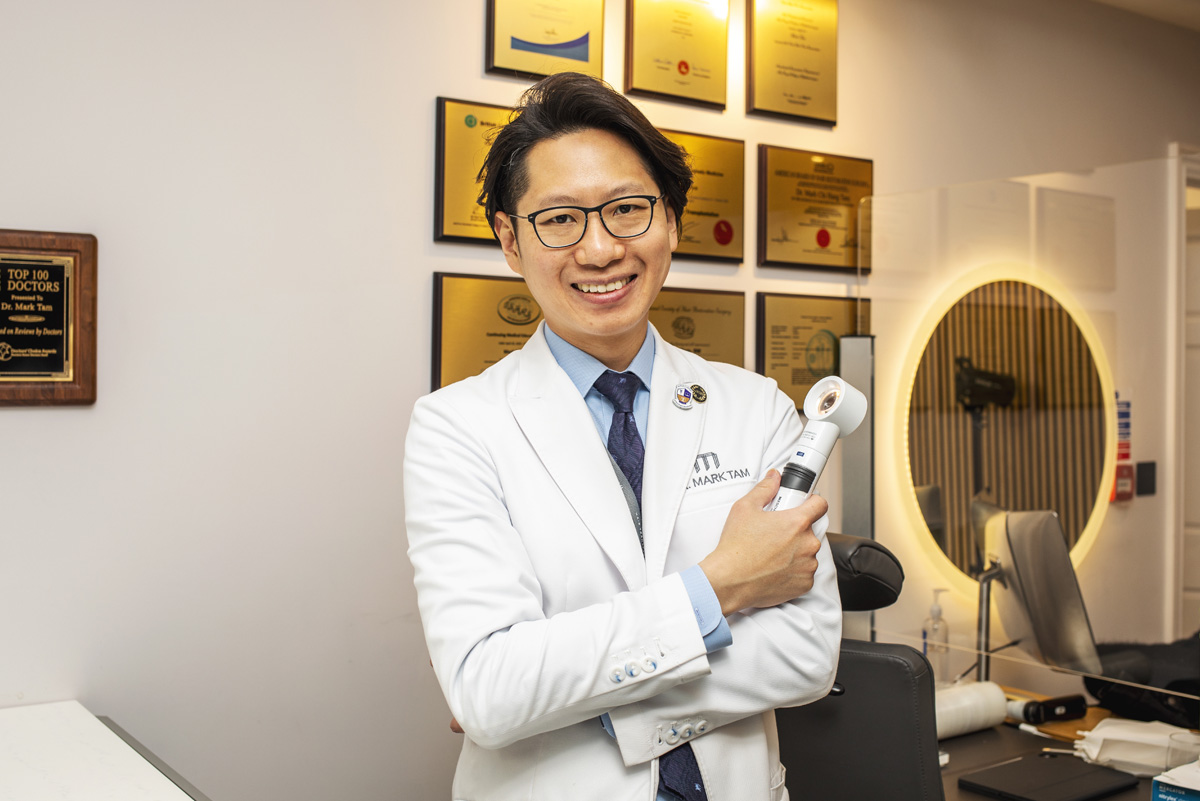
Dr Mark Tam explains the benefits of an assessment.

* - Required field